An acoustic guitar is a guitar that has a hollow body and is meant to be played unplugged or without an amplifier. There are many different types and sizes of acoustic guitars, and they are tuned in a variety of ways. The most common tuning for an acoustic guitar is E-A-D-G-B-E, which is the same as the lowest six strings on a guitar. This tuning is also used for electric guitars. Acoustic guitars can also be tuned to open tunings, which are tunings that have the strings tuned to a chord. Open tunings are often used by slide guitarists, as they make it easier to slide up and down the strings. Some common open tunings are E-A-D-G-B-E, D-A-D-G-B-E, and G-D-G-B-D-G. Acoustic guitars can be tuned to a variety of other tunings as well, such as drop D, half-step down, and full step down. Each of these tunings has a different sound, and can be used for different styles of music. Experimenting with different tunings can be a great way to find new sounds for your guitar.
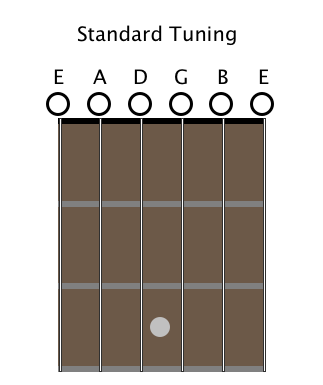
Learning how to tune a guitar is not difficult, but there are a few traps to avoid. The strings E, A, D, G, B, E (from lowest to highest pitch) are ordered here. When tuning, it should be the same as if you were tuning for the attack you would normally play. You can simply tune a guitar by turning the tuning pegs until the pitch matches the pitch shown on the tuning label. At the very least, most electronic tuners have a wide range of tuning options, including chromatic, acoustic, and bass. As soon as you turn on the digital screen, it will display a green LED light or red button that indicates whether you are flat or sharp (see image above). When using chromatic mode, the next nearest note on the chromatic scale will appear.

These are all the notes used in western music, and not just the strings. There are several methods for tuning a guitar without a tuner. We’ll go over both in greater depth in a moment. Using the fifth fret method, also known as relative tuning, is the most common way to tune a guitar. Tuning forks that vibrate at an average of 329.6 are also available, implying a middle E. It is always the note on the white key, two keys to the left of the first of the three black keys, and you will always hear E when you play piano. These are simply overtones that are part of the fundamental tone. It is not necessary to keep your hand on the fretboard during harmonic tuning.
How To Tune A Guitar? Comprehensive & Easy To Follow Guide
If you don’t understand concert pitch and standard tuning, it’s best not to try to tune into an alternate tuning. It’s worth noting that most guitars are tuned to a manufacturer’s specifications, so don’t be afraid to change your strings. Old strings will never keep in tune and will not sound as good as new strings. Most strings should be changed on a regular basis, but it is dependent on how frequently you play.
Abaritone guitars, which come in six, seven, and eight string varieties, are available with scales ranging from 26 inches to 30 inches (762mm). guitars tuned to a full octave below the low E on a standard scale model
Tuning a guitar in the same way with Standard Tuning or with any other tuning is not required. The tuning of an acoustic guitar and an electric guitar differs slightly, but they are the same.
Open C Tuning Guide: 57 Songs, Tabs & Chords (2023)
If you play your first guitar, you’ll most likely find it out of tune. You can also purchase a guitar tune Tiger from Guitar Tricks here or tune your guitar to your liking. The strings and guitars in a guitar can be vastly different, so make sure you’re tuning correctly for the situation.
Most acoustic guitars come with built-in pick-ups and pre-amplifiers, so they do not need to be tuned in order to be heard. However, if you want your guitar to sound its best, it is recommended that you tune it before each performance or practice session.

The tuning of an electric guitar is the same as that of an acoustic guitar. The only difference is that tuning the notes is more difficult, regardless of whether you play them by ear or by tuning them. An electric guitar tuner that does not require the guitar to make a sound is the best. Planet Waves PW-CT-12 NS Micro Headstock Tuner employs vibrations rather than sound waves to tune a guitar, which is why it is called a vibrations tuner. You can use this device to practice scales, and it’s so small you can leave it on your instrument for years. It’s true that electric guitars don’t stay in tune when you play a variety of instruments. A basic video outlining how to get in can be found here. There are a number of guitar tuning options available for various types of guitars. You should take note of this in order to learn more about owning and playing an electric guitar.
How To Use Electronic Guitar Tuners & Tuning Forks
A guitar can be tuned in a variety of ways. It is possible to tune from flat to sharp or from flat to sharp. Tuning from flat to sharp is the most common method, and we recommend it. It is common for guitars to go out of tune more quickly when tuning from sharp to flat.
It’s a good idea to tune your guitar from flat to full speed as soon as you start playing it. You can also make your guitar play easier by tuning it.

The guitar is typically tuned EADGBe on a pitch standad A440, which is 440 Hz. If you’re using an elctronic, use 440 Hz; this means that the notes from lowest to highest strings sound as the tones e, a, d, g, b, and e, in the picture (see figure).
How To Tune A Classical Guitar
The Korg CA-30 guitar tuner is an excellent choice for guitarists. A Korg CA-30 tuner is an excellent tool for musicians of all skill levels. The power is set to 440Hz in Concert Pitch mode. It is critical to maintain a constant tuning of the guitar notes. Furthermore, the tuner has a pitch range of 82.41-329.63Hz, allowing it to tune any guitar regardless of pitch. The tuner is easy to use, and it has a bright, easy-to-read display that makes reading it simple.
The acoustic guitar is tuned in the key of E. This is the standard tuning for the guitar and is the most common tuning used.

From the lowest to the highest strings, each fret is tuned to E, A, D, G, B, and E again. Every string can be tuned to fit into a completely new chord, scale, or key signature. In E Phrygian mode, the sixth and first strings are both E, so when tuning to standard, the center of the note is usually thought to be at the sixth string or first string. The tuning of the guitar is one of the most important aspects of playing it over a piano. tuning in the late 1980s and early 1990s. Alice had written Them Bones, which is now known as Alice’s Bones. The guitar key signature does not exist in Chains’ second album Dirt; instead, it is a scale/key signature that better fits the structure of the instrument.
How To Tune Your Guitar: A Beginner's Guide
You can easily learn the Key of C Major, A Minor, G Major, E Minor, D Major, and E Major on the guitar. All you have to do is learn breathing techniques on the harmonica, and that is what I believe makes playing it so simple. The guitar is not tuned to a specific key, but E Phyrgian mode, the key of C Major, is a possible place to find it. It’s one of the instrument’s greatest features that players can alter the tuning of the guitar in a variety of ways.
Learning the key of G major on the guitar and playing it is an excellent way to enrich your musical skill. Aside from being the natural key for the guitar, this is the most fundamental key in the guitar, to say the least. This key is also the simplest to play due to the fact that the chords in it are composed of three fourths (low E to A, high A to D, and low G) and thus are very simple to play. The key of G major is also known as EADGBE, and this is one of the tunings used on standard guitars. As a result, all of the chords in this key are held together by the open strings of the guitar, making it much easier to learn and play them. The G major scale and associated scales are considered the standard case for the guitar and should be learned as such because they are the most fundamental, easiest, and natural of all the keys.
The tension of a string has traditionally been thought to have an impact on the quality of the sound. This isn’t always the case, but it does happen. Guitar players prefer lower-tension strings
0 Response to "Acoustic Guitar Tuning Guide"
Posting Komentar