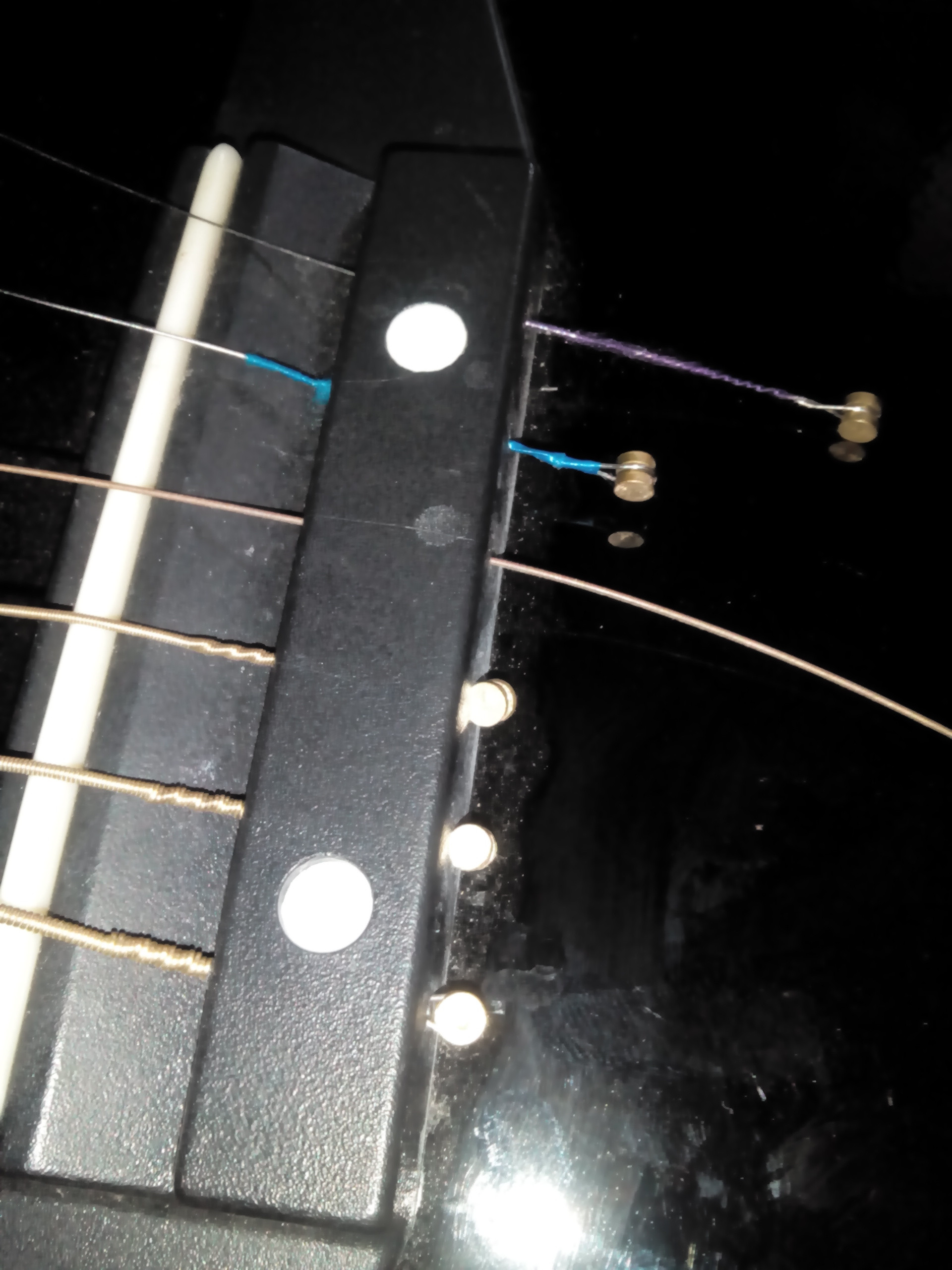
In a nostalgia-fuelled new video, a ist has replaced his strings with rubber bands and, surprisingly, the end result is pretty impressive.
The footage was released by popular YouTuber Bernth Brodträger and shows that, with enough determination, rubber bands can make a pretty decent substitute for real strings.
Released on Sunday (26 February), the two-minute-long video has already proved to be a hit with the munity – racking up over 750, 000 views at the time of writing.
How To Replace Guitar Strings!
Since forming his channel, the ist, who goes by the username Bernth, has captured the attention of countless players for his experimental videos.
In the past two years alone, the YouTuber has pushed his acoustic s to extremes – including flooding an Ibanez model to capture some ethereal underwater tones, and setting off fireworks from the soundhole of another.
It is with his latest development however that the musician embarks on a more nostalgic experiment, mastering something that we all thought was impossible as kids. Replacing the bottom three strings with elastic bands, Brodträger has written a track called
How To Change Your Guitar Strings
“I used rubber bands as strings to record my new song, ” he wrote in the video. “Stretching them results in pretty otherworldly sounds, [for example, ] when they slam the , it sounds like a church bell.”
In the footage, the ist also explained that the most difficult aspect of the project was ensuring that each string stretched to the correct pitch – something he could only do by relying on his ears.
Surprisingly, the makeshift strings make for some impressive Gojira-inspired riffs, and were durable enough to last for the whole duration of the song.
How To Change The Strings Of Your Acoustic Guitar
1 “We’re a very loud band. The energy from that contributes to the way we play” How Dusk blend punk and Americana to create a three- barnburner
2 “We can scream and wail to show rage, and also create these beautiful harmonies that show solidarity and love”: HAWXX on the pure catharsis of metalThis is a “how to” guide. If you’re not sure how often you need to do this, check out our other article on how often to change your guitar strings.
You may have heard that it is best not to take off all strings at once. Take off all of the strings, the theory goes, and your guitar neck will get all messed up because now there’s nothing to counter act the tension from the truss rodA steel rod in the guitar neck that counteracts the tension from the strings .

How Often Should You Change Guitar Strings?
To take a string off, pluck the string and then follow the string to the tuning machineThe chrome or brass-colored moving parts mounted to the guitar headstock which allow the strings to be tightened or slackened. on the headstockThe “head” of the guitar, and the portion where the tuning machines and nut are mounted. of the guitar. Wind that tuning machine in the direction that loosens it, normally clockwise. You should hear the string dropping in pitch as you unwind it.
Be sure to listen to the string as you unwind it. Without this feedback, you wouldn’t know whether you’re winding up or down. And if you wind it up, it'll snap!
Either continue unwinding the string until it can be removed completely, or simply cut it once enough tension is released. Now remove the string from the tuning machine and from the bridgeThe typically dark mahogany-colored piece of the guitar fixed to the body of the guitar. The saddle and bridge pins are mounted on it. of the instrument.
Easy Ways To Replace The Bridge On An Acoustic Guitar: 15 Steps
To remove from the tuning machine, you should be able to pull in a circular motion and remove the string once it’s loose enough. If it gets stuck, a pair of pliers will help you finish the job.
On steel-string acoustic guitars, the string wire is normally attached to a ball-end which is secured in the bridge by one of six small pins. The pin must be removed to take out the string. Highly recommended is the Snapz Bridge Pin Puller[?]Affiliate Link , which does a fine job at pulling these out.

Sometimes a piece of string gets stuck in the hole. If this happens, you can cut a small piece from one of the big strings and use it as a ream to push out the stuck string from the other side.
Guitarist Replaces Strings With Rubber Bands, Releases “world's First Rubber Metal Song”
Nylon String Acoustic Nylon strings come off the bridge easy enough, once the other end is free. On nylon-string acoustic guitars, the string is commonly tied through the bridge by feeding one end in and then creating a small knot. Simply pulling on the knot is enough to untie it once the string is removed from the tuning machine. Electric On electric guitars, the method for stringing the guitar into the bridge varies. Sometimes it is fed in through a hard-stop tail, such as on a typical Les Paul. Other times it is fed in through the back of the guitar, such as on a Strat. For this guitar, you actually have to flip the instrument over to see where the string goes in. Either way, just pushing the string in the opposite direction should remove it. Sometimes a piece of string gets stuck in the guitar. If this happens, you can cut a small piece from one of the big strings and use it as a ream to push out the stuck string from the other side. Step 4: (Optional) Clean the Fretboard
By this point, you should have removed all of the old strings from the bridge. You should be looking at a naked fretboard.
Use some Steel Wool, 0000 Grade[?]Affiliate Link to gently scrub off any dirt and grime from the fretboard, especially around the frets. You can also use it to polish the frets to a mirror shine if you like.
How To Change Your Guitar Strings (with Video)
Now dust off the fragments of steel wool with an Planet Waves UNTREATED Cloth[?]Affiliate Link and spray the Dunlop 65 Cleaner[?]Affiliate Link onto the fretboard, gently scrubbing and polishing until it’s clean.

For a professional finish, rub a little lemon oil into the fretboard. Be sure to wipe away any residue with a cloth.
For one last professional touch, dab some Dunlop Lemon Oil[?]Affiliate Link all along the fretboard. Don’t be too liberal as it’s messy to clean up. Rub it into the fretboard until it is all gone, leaving a clean, oiled (and fragrant!) fretboard for you to play with.
How To Change Guitar Strings On An Acoustic Guitar
Step 6: Insert a New String Steel String Acoustic Secure the string with the bridge pin. Remove the bridge pin for the low E string. Insert the ball end a few inches into the hole. It doesn’t matter how far, because you’ll pull it tight in a moment. On the bridge pin, find the grooved slot. This groove is where the string should rest. So push the pin in with the groove facing the neck. Now hold the pin down and pull the string up all the way. You've got to watch the pin while you tune the string, as they sometimes pop out. But you don’t need to push it hard into the hole at all. Once the string is wound, the tension from the string will keep the pin in place. If the bridge is pinless, simply feed the sharp end of the string through the hole towards the guitar neck, and proceed to the next step. For pinless bridges, you may want to slightly bend the sharp end of the string. That makes it easier to slide through the bridge hole. Nylon String Acoustic After fastening to the bridge, slip the end of the nylon string into the headstock. It’s recommended you use ball end strings. These will save alot of time. All you need to do is slip the pointy end through the hole and pull it tight. For regular nylon strings, you’ll actually have to tie a new knot. The string should have one end that is a bit more flexible. Feed that end through the top hole on the bridge, and wrap it around itself a few times. Now, by pulling the other end of the string, you should be able to pull the twisted portion of the knot over the 90-degree edge of the bridge, with the “knot” being formed mostly by the pulling action on the other side of the string. This task alone may merit its own tutorial; see YouTube for further instruction if necessary. Electric Most electric guitar strings are installed just by pulling the loose end through a hole. Step 7: Wind the New String
Now that the string is secured to the bridge, pull the loose end towards the guitar neck. Feed it through the nutA small ivory-colored piece attached to the nut, right before the beginning of the first fret of the guitar, with six notches for the strings to rest in. in the slot that was held by the old string. Wind the tuning machine until one hole is facing the nut. Slip the string in through that hole.
Since you want to wind the string around the tuning machine for 2-3 full revolutions, be sure to give yourself plenty of slack in the

0 Response to "Replacing Acoustic Guitar Strings Youtube"
Posting Komentar